
- Introduction and Context 🎥
- Hosts introduce the War Report and discuss the current status of the war.
- Highlights a stalemate situation and reflects on the unique nature of the enemy's resolve.
- Enemy Ideology 💭
- Discussion on the differences in motivation and mindset between American troops and their enemy.
- Emphasizes the enemy’s willingness to die for their beliefs compared to the more materialistic perspective in the U.S.
- American Complacency 📉
- Critiques American society's focus on trivial comforts and lack of enduring struggle.
- Contrasts this with the continuous hardship faced by certain regions globally.
- Political Violence 🔫
- Covers an assassination attempt on Donald Trump during a recent White House event.
- Questions the effectiveness and training of the Secret Service, citing security lapses.
- Expectations of Security 🛡️
- Asks whether the Secret Service is meeting the demands of their role.
- Explores contrasting views on whether the situation shows professionalism or significant failings in security measures.
- Assessing Security Protocols 🔍
- Discussion on the need for improved security measures following an incident where shots were fired.
- The emphasis is on how effective shooting responses could have potentially prevented casualties.
- De-escalation vs. Aggression ⚔️
- The conversation contrasts Secret Service training focused on de-escalation with the urgency of a direct response to immediate threats.
- Personal opinions are shared on whether the methods should prioritize aggressive action over de-escalation when faced with armed threats.
- Concerns Over Safety 🚨
- Recognition of multiple assassination attempts against a current president in a short time span raises alarms about security effectiveness.
- Suggestions are made on the need for personnel changes to enhance protective measures.
- Trump's Reaction 🤔
- Insights into a specific incident during an interview where Trump reacted defensively when faced with a mention from a manifesto.
- The discussion revolves around whether his response suggests deeper guilt or concern.
- Melania Trump's Public Image 📉
- Observations about Melania Trump’s lack of public presence and expression, leading to questions about her marriage dynamic.
- Comments on her reaction to a joke about her husband, implying she maintains a specific public narrative.
- Melania Trump's Media Presence 🎤
- Discussion on Melania's disinterest in social media.
- Suggestion that her tweets are managed by PR professionals.
- Implication that she prioritizes personal interests over online presence.
- Freedom of Speech Debate 🤔
- Commentary on the importance of the First Amendment.
- Contrast between Melania's reaction to social media criticism vs. Trump’s past remarks.
- Highlighting the double standards in how freedom of speech is perceived.
- Operation Epic Fury Overview 💣
- Critique of changing military strategies concerning Iran.
- Discussion on economic vs. traditional combat strategies.
- Assertion that bombs alone are an ineffective approach.
- Iran's Response and Strategy 📉
- Analysis of Iran's tactics in response to U.S. strategies.
- Suggesting that Iran prefers prolonged conflict over resolving issues diplomatically.
- Mention of the political implications in the Middle East regarding U.S. military actions.
- Consequences of Ground Troops 🌍
- Predicted consequences if U.S. troops are sent into conflict with Iran.
- Discussion on Iran's potential to claim victories against U.S. forces.
- Warning that the situation could escalate into an extended conflict.
- Military Service for Presidential Candidates 🪖
- The speaker argues that potential Presidents should have military experience, ideally serving in the enlisted ranks or as a general during wartime.
- Points out that individuals who engage in war decisions often lack firsthand combat experience.
- Critique on War Strategy 🛑
- Discussion emerges regarding the effectiveness of bombing strategies, emphasizing that traditional tactics have failed.
- Questions whether the military and advisors are providing the right information to the President or if he is disregarding their advice regarding conflicts.
- Economic Impact of War 💰
- The conversation shifts to how the ongoing war is burdening the U.S. economy and causing inflation-related issues.
- Highlights the dwindling economic condition of both the U.S. and Iran, suggesting the conflict has significant global repercussions.
- Iran's Economic Strain 📉
- Iran is reported to be losing billions daily due to sanctions and blockades, affecting their ability to manage war efforts.
- Asserts that the situation could lead to a collapse of their oil export capabilities, further complicating their economic recovery.
- Long-term Consequences of Stopping Oil Pumping ⛽
- Discussion on the implications if Iran can't export oil, stating it would require restarting drilling operations and lead to a significant delay in recovery.
- Suggests that stopping oil production could push Iran back significantly in terms of economic capability.
- Oil Supply and Economic Factors 🌍
- Discussion centers on the current sources of oil supply and the economic implications of the ongoing conflict.
- The Treasury Secretary emphasizes the necessity for involved nations to negotiate despite economic pressures.
- Impact on American Consumers ⚠️
- Concerns are raised about how prolonged conflict will affect gasoline prices in the U.S., with predictions of prices reaching $10/gallon.
- The general public’s reaction and outrage due to rising costs are anticipated.
- China's Role and Strategy 🐉
- China is described as the main buyer of Iranian oil, providing significant support.
- The discussion considers whether China will intervene or negotiate to stabilize the situation amidst their vested interests in Iran.
- NATO's Future 🏛️
- Speculation on NATO's integrity post-conflict is discussed, suggesting it may be "shattered" due to strained relationships and divergent agendas.
- The impact of U.S. leadership on NATO involvement is critiqued, especially under current political strategies.
- Unclear Leadership in Iran 🤔
- Uncertainty regarding Iran's leadership structure complicates negotiation efforts, with a lack of clarity about who holds power.
- The inconsistency in U.S. goals regarding regime change and nuclear capability is highlighted as a reason for the challenges faced in diplomatic resolutions.
- Understanding Conflicts 🌍
- Discussion on U.S. military history and experiences in regions like Afghanistan and Iraq.
- Acknowledgement of the culture of the adversaries and the need to learn from past mistakes.
- Emphasis on the repeating cycle of entering new conflicts without sufficient understanding.
- Influence of Advisors and Lobbyists 💼
- Question raised about whether Trump's actions are influenced by advisors or his own decisions.
- Speculation about the role of lobby groups and their hidden influence on government decisions.
- Iran’s Defiance and War Readiness 💣
- Iran's leadership, specifically Majaba, expresses defiance against foreign forces, indicating a desire for war instead of peace.
- Insight into how U.S. narratives about peace negotiations are perceived as dishonest and misleading.
- War Powers Act Discussion 📜
- Introduction of the War Powers Act and its relevance to the current military situation.
- Debate surrounding whether the Act holds significant weight in modern conflicts, with suggestions it might be used to claim a diplomatic victory.
- Future Implications of U.S. Actions 🔮
- Consideration of presidential legacy versus addressing immediate issues like Iran's nuclear ambitions.
- The belief that U.S. actions may not resolve underlying problems, with an acknowledgment of ongoing and future conflicts if the status quo persists.
- Iran's Political Landscape 🌍
- Discusses the dictatorship established since 1979.
- Emphasizes the unlikelihood of successful negotiations with a regime accustomed to holding out.
- Challenges of Military Engagement 🎖️
- Highlights the difficulty of outgunning or outmaneuvering a resilient adversary.
- Reflects on past military interventions like Iraq, suggesting prolonged involvement in Iran is possible.
- Negotiation Dynamics 💬
- Critiques reliance on intermediaries like Pakistan for negotiations.
- Argues for direct communication with adversaries to ensure effective negotiations.
- Tucker Carlson's Apology 📺
- Mentions Tucker Carlson’s public apology regarding his past support for Trump.
- Suggests Carlson's influence on public opinion and the complexity of political allegiances.
- Expectations for the Future ⏳
- Predicts increased tensions and potential military action in the coming weeks.
- Concludes there is no end in sight for the ongoing conflict, with questions surrounding the overall effectiveness of military strategies.
- Closing Remarks and Appreciation 🙏
- Discussion on ongoing situations with Putin and their significance.
- Expressions of gratitude for dialogue and friendship.
- The speaker reflects on insights shared during the conversation.
- A heartfelt farewell with promises to reconnect in the future.
- Acknowledgment of viewer support and shared love among participants.
📬 Never miss a djvlad video — every new upload summarised in your inbox.
Follow free
More from djvlad
 Army Sniper Nicholas Irving on US vs Iran War, ICE, Government Shutdown (Full Interview)
 Nicholas Irving on 45 Days of War, Ineffective US Tactics & Israel (Uncensored Full Interview)
Nicholas Irving on 45 Days of War, Ineffective US Tactics & Israel (Uncensored Full Interview)
Nicholas Irving on 45 Days of War, Ineffective US Tactics & Israel (Uncensored Full Interview)
 Nicholas Irving on Trump Ultimatum to Iran, The Strait of Hormuz & Stock Market (Full Interview)
Nicholas Irving on Trump Ultimatum to Iran, The Strait of Hormuz & Stock Market (Full Interview)
Nicholas Irving on Trump Ultimatum to Iran, The Strait of Hormuz & Stock Market (Full Interview)
Nicholas Irving on Trump Ultimatum to Iran, The Strait of Hormuz & Stock Market (Full Interview)
Nicholas Irving on Trump Ultimatum to Iran, The Strait of Hormuz & Stock Market (Full Interview)
 Nicholas Irving on U.S. in Iran Over 60 Days, Secret Service Failing Trump (Full Interview)
 Nicholas Irving on U.S.- Iran, Rising Gas Prices & The War Powers Act (Uncensored Full Interview)
 Nicholas Irving on US vs Iran War, Oil Control & Combat Mindset (Full Interview)
 Nicholas Irving: The Heavy Toll of Combat & the Pain of Losing Comrades (Full Interview)
Nicholas Irving: The Heavy Toll of Combat & the Pain of Losing Comrades (Full Interview)
Nicholas Irving: The Heavy Toll of Combat & the Pain of Losing Comrades (Full Interview)
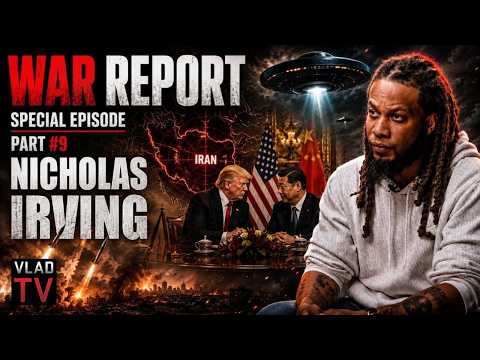 Nicholas Irving: UFO Declassifications are a Distraction From America’s Economic Crisis
 Nicholas Irving: War at 100 Days, Could Last to 2027, Trump Avoids Escalation (Full Interview)