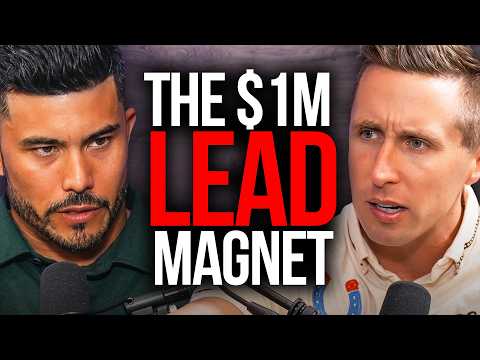
Video Summary: AI, Business, Marketing, and the Future of Events 🤖
Key Takeaways
- AI is changing how companies operate: Russell says ClickFunnels went from about 500 employees to fewer than 100, using AI to automate support, development, and other work.
- The biggest opportunity is directing AI—not just using it: Entrepreneurs should move from doing tasks themselves to managing AI agents and designing systems.
- Software is becoming faster and more custom-built: The speakers expect businesses to create tools tailored to their needs, putting pressure on traditional, feature-heavy SaaS products.
- Events can still work, but they are costly and risky: Virtual challenges are generally easier and more profitable; in-person events can be valuable for community but require careful planning.
- The future of information products may combine education, software, and AI-powered execution: Rather than just teaching people what to do, businesses can provide prompts and tools that do the work.
1. Events: Results, Scale, and Risks 🎤
- Russell described an online event with nearly 2 million registrations, a reported peak of around 203,000 active viewers, and about 1.2 million viewers over the live session.
- The event used YouTube rather than Zoom, helping grow the host’s audience. Russell said a single session added roughly 35,000 YouTube subscribers, and the campaign also drove significant social-media growth.
- Funnel Hacking Live (FHL) had not covered AI at its previous event, so the organizers made AI the focus of the latest one.
- FHL’s offer was a $150,000 AI implementation package. The event reportedly broke even on ticket and venue costs and sold around 31 packages, totaling about $4.5 million.
- Russell emphasized that event choreography matters: presentation order, timing, transitions, and the sales pitch all affect results.
- In-person events can be financially and operationally risky. The speakers recalled events where:
- Offers were poorly timed or priced.
- Attendance was lower than expected.
- Presentations or demos failed due to technical problems.
- A speaker unexpectedly pitched a competing offer.
- Their conclusion: virtual challenges are often easier to produce and monetize, while live events are harder—but can create a special sense of connection and community.
2. AI and the Changing Workplace 🧠
Russell described a framework for four levels of value:
- Doing manual work
- Managing people who do the work
- Using communication skills, such as sales and speaking
- Using imagination and vision to create leverage
His concern is that AI can make people faster at routine tasks while keeping them at the lowest level of value. The goal, he argued, is to use AI as a team to manage—not merely as a tool to complete more individual tasks.
- Russell said a company AI system—an “AI box” built with tools including OpenClaw—replaced around 250 support roles and more than 100 developer roles.
- ClickFunnels had about 500 employees at its peak and now has fewer than 100, with further optimization ongoing.
- Staff were told to use AI to 10x their productivity or leave. Some adapted and became more productive; others did not.
- Russell framed this not only as job replacement, but also as an opportunity for employees to become more valuable by managing multiple AI agents.
3. AI-Driven Marketing and Sales 📈
Copywriting and video sales letters
Russell said AI can outperform him at copywriting when it is properly prepared, but not when given a vague prompt such as “write a sales letter.”
His process includes:
- Studying strong examples and “swipe files.”
- Using AI to analyze 37 Agora video sales letters and identify their shared structure.
- Teaching the AI his personal speaking and writing style.
- Providing the stories and material the copy should include.
He said this approach helped produce 14 video sales letters in four months. Some used AI-generated scripts read by Russell, combined with animation and on-camera segments.
Ad creative
- Russell described a campaign that produced roughly 4,500 ad variations by combining scripts, hooks, calls to action, and different recording setups.
- AI can help generate and organize these variations, while advertising teams track metrics such as CPM and cost per acquisition.
- The speakers noted that AI raises the marketing floor, allowing less-experienced marketers to produce decent material—but greater competition may also increase advertising costs.
AI in sales
- Russell described using AI phone calls to follow up with people who had not purchased. The AI identified itself, answered questions, and made a time-limited offer.
- He expects AI to increasingly handle appointment setting and some sales conversations, while human closers remain useful in many situations.
4. Custom Software and the Future of SaaS 💻
Russell believes many businesses will build small, custom software tools instead of paying for large platforms filled with features they do not use.
- He said he had built 37 software products in three months with AI coding tools and no coders.
- He described rebuilding an existing app from screenshots in about 30 minutes using Overskill, after an earlier version had cost about $150,000 to develop.
- A team member also built a custom CRM tailored to their specific sales needs rather than relying on a general-purpose CRM.
- Russell’s view is that traditional SaaS companies—especially those whose main advantage is a visual editor or large feature set—will face pressure as users generate custom tools with AI.
ClickFunnels’ direction
- ClickFunnels remains a roughly $50 million business, Russell said.
- The company is developing an AI-focused version that can build funnels and automatically test and optimize them.
- The planned product is intended to be simpler and more focused on funnel building, with a low monthly price and additional charges for credits.
- Russell believes the platform’s future is more likely to be AI-driven funnel creation and optimization than traditional drag-and-drop editing.
5. Information Products and AI Education 📚
- Russell argued that selling information alone may become harder as AI makes knowledge easier to access.
- He sees opportunity in combining education with software:
- Teach a strategy.
- Provide a prompt or tool that helps the customer carry it out.
- Use AI to reduce the amount of work the customer must do manually.
- He described this approach as turning books into software tools and building coaching programs around a “prompt path.”
- The speakers debated whether AI software will become nearly free. Russell suggested that durable business models may rely more on transactions, payment processing, or usage than simply charging a large subscription for software.
6. Audience Growth, Offers, and Distribution 🌍
- Russell said international advertising can produce more leads at lower cost, even if conversion rates are lower; the overall return can still be attractive.
- He was impressed by using YouTube for live events because it can turn registrations into long-term subscribers and viewers.
- He described paid and organic marketing as complementary: regular organic content can build goodwill and make later paid campaigns more effective.
- Russell said offers can last for years, but business owners often get bored with them before the market does. He cited ClickFunnels’ offer as working for about seven years and mentioned Jeff Walker’s long-running launch model.
- He also argued that AI creates opportunities for small, niche businesses—especially when an owner builds a tool for a problem they personally understand and already has access to the audience that needs it.
7. Membership Events: The M19 Example ⛳
One speaker described M19, a golf-focused membership community for entrepreneurs doing more than seven figures annually.
- Members pay an initiation fee and annual dues, then pay separately for events.
- Typical three-day trips cost around $5,000 and include golf, lodging, meals, and mastermind sessions.
- A recent non-member golf event sold 36 tickets at $1,000 each; around 30 people attended, and 15 had joined the membership by the time of the conversation.
- The speakers discussed using a virtual event featuring a well-known golfer or entrepreneur to attract potential members, followed by member interviews and an invitation to join.
8. Business Lessons and Personal Plans
- Russell said buying companies has generally been a poor fit for him, except for an information business he understood well. He described buying a software company for about $40 million that later stopped performing as expected.
- ClickFunnels received offers valuing it at around $500 million, but Russell and his partner declined. In hindsight, he regrets not selling, while also saying the company was not ready for a sale and he was not ready to leave.
- He believes the company could have been more valuable with stronger professional management, its own payments infrastructure, and a sharper focus on funnel building.
- Russell’s longer-term aim is to reduce his day-to-day operating role, build an event center and museum, and spend more time reading and writing.
- He also discussed his extensive rare-book collection, which he estimates has cost around $13–14 million, and his interest in preserving the history behind the books.
Bottom Line
The conversation’s central message is that AI is lowering the cost of creating software, marketing assets, and operational systems. Businesses that succeed will need to use AI to create measurable value, build products around specific audiences, and develop distribution—not just produce more output. Live events and traditional SaaS can still work, but they require clear differentiation, strong execution, and economics that justify the effort.