
💪 Summary: The Power of Body Language
Social psychologist Amy Cuddy explains that body language influences not only how others perceive us, but also how we feel and behave ourselves. Her central idea: adopting an expansive “power pose” for two minutes before a stressful, evaluative situation may help people feel more confident and perform more effectively.
🧍 What Body Language Communicates
- High-power poses are open and expansive: standing tall, taking up space, or placing hands on the hips.
- Low-power poses are closed and contracted: hunching, folding the arms, or making yourself physically small.
- People often respond to someone else’s powerful posture by making themselves smaller.
- Judgments based on nonverbal cues can affect meaningful outcomes, such as hiring, promotion, and social impressions.
🧠 The Research Cuddy Describes
In a laboratory study, participants held either a high-power or low-power pose for two minutes. Cuddy reports that, compared with low-power posing, high-power posing was associated with:
- Greater willingness to take a gamble (86% vs. 60%).
- Higher testosterone and lower cortisol in saliva samples.
- A stronger impression during a mock job interview: independent reviewers were more likely to recommend hiring high-power posers.
She says the interview effect was linked to the participants’ presence and confidence, rather than measurable differences in the content or structure of their answers.
✅ How to Try It
Before a job interview, presentation, or another stressful situation:
- Find a private place—such as an elevator, restroom, or office.
- Hold an open, expansive posture for two minutes.
- Focus on preparing yourself, not on performing the pose for other people.
Cuddy’s point is that the pose is meant to influence your own state of mind, not to impress an audience.
🌱 From “Fake It” to “Become It”
Cuddy shares that, after a serious car accident and traumatic brain injury, she struggled with feeling like an impostor while returning to college and pursuing an academic career. A mentor encouraged her to keep taking on challenges until she began to feel that she truly belonged.
Later, she supported a student who felt out of place and was afraid to participate. The student began speaking up and, over time, gained confidence.
Takeaway: Repeatedly acting with confidence can help you internalize it—not just “fake it till you make it,” but “fake it till you become it.”
⭐ Main Message
Small changes in posture may help shift how you feel and how you show up. Before a high-pressure moment, take two minutes to stand tall, open up, and give yourself the chance to communicate who you are.
Other summaries of this video
More from TED
 Celeste Headlee: 10 ways to have a better conversation | TED
 How to Speak So That People Want to Listen | Julian Treasure | TED
How to Speak So That People Want to Listen | Julian Treasure | TED
 Inside the Mind of a Master Procrastinator | Tim Urban | TED
 Why Venting Doesn’t Help You Deal with Anger | Jennifer Parlamis | TED
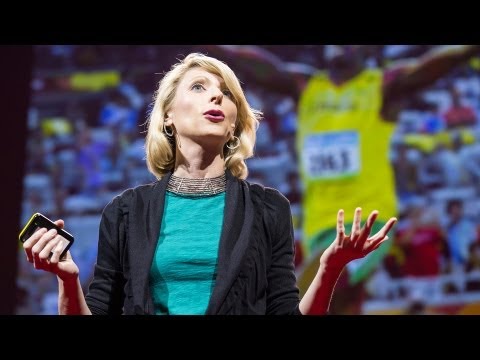 Your Body Language May Shape Who You Are | Amy Cuddy | TED