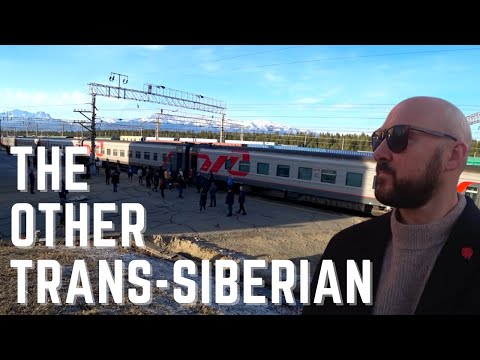
Journey Along the BAM (Baikal–Amur Mainline) 🚂🌲
Overview
- Travelogue across the Baikal–Amur Mainline (BAM), a Soviet 1970s–80s mega-project to open/exploit eastern Siberia’s mineral wealth and provide a strategic military alternate to the Trans-Siberian Railway.
- Mix of history, personal travel experience, local scenes, architecture, food, and landscapes (Lake Baikal, towns built for BAM).
Key Points — History & Purpose
- Why BAM was built
- Economic: access mineral riches (gold, diamonds, coal, copper) of eastern Siberia.
- Strategic: after 1969 Sino–Soviet border tensions, needed a railway less vulnerable to a southern cutoff.
- Scale & cost
- Massive engineering feat: tunnels through mountains, bridges over rivers, vast forest clearance, huge investment that strained the Soviet economy.
- Many construction machines and equipment later abandoned along the route.
- Labor & population
- Towns built rapidly in the 1970s–80s by people from across the USSR (Leningrad, Latvia, Moscow, Uzbekistan, Tajikistan, etc.) and some allied countries.
- Resulting towns have distinct architectural/ cultural motifs tied to their builders.
Route & Logistics
- Branching from the Trans‑Siberian near Lake Baikal: BAM heads north of Baikal across the middle of Siberia.
- Trains run with limited station stop times — be ready to board/leave quickly.
- Sleeping compartments/coupes common; carriage attendants (provodnitsa) provide bedding, tea; quality varies and greatly affects travel comfort.
Notable Places & Scenes
- Taisha station: last pre‑revolutionary building seen before BAM-era infrastructure.
- Severobaykalsk (Severe Bay Cals on transcript): town on the northern shore of Lake Baikal; example of BAM-era planned town (palace of culture, statue “Road of Friendship,” arboretum, pond with turtles).
- Lake Baikal: spectacular scenery, clean water, mountains; emotional payoff for hard travel.
- Novi (Novy/Oyan?): built by Latvians — Latvian script/architecture visible.
- Tynda (“Tinder” in transcript, Tynda is BAM’s main hub): major BAM town built by Muscovites, with murals/paintings depicting BAM construction.
Local Life & Atmosphere
- Towns retain strong Soviet-era aesthetics: palaces of culture, Lenin references, statues to BAM builders, murals showing pioneers/geologists.
- Street names and institutions often reference builders’ origins (e.g., Prospekt Leningradski, “60 years of the USSR”).
- Mixed, multicultural communities formed during construction; monuments celebrate “friendship” of Soviet republics.
- Everyday scenes: bear skins drying on houses, locals, railway station dining halls (stolovaya), inexpensive meals (example: ~75 rubles ≈ £0.75 for a small meal).
Practical Travel Notes (How‑to from the video)
- Boarding: expect short station stops; be ready to hop on/off quickly.
- Sleeping: bring tolerance for noisy cabinmates (snoring, chatter). Consider earplugs.
- Food: buy simple staples at station shops (Doshirak instant noodles, Soviet lemonade, compote).
- Accommodation: railway station hotel rooms can be cheap and convenient — unique travel hack used successfully in multiple towns.
- Interactions: provodnitsa (female carriage attendants) can provide bedding, tea, and sometimes small souvenirs (railway glass and holder).
- Timing: trains run long distances across time zones; plan for limited services between stops.
- Respect local culture: monuments, murals, and town identities reflect builders’ origins and Soviet heritage.
Memorable Scenes & Anecdotes
- Rubbing a golden Lenin statue head for luck at Taisha.
- Sleepless night due to a loud snorer in the coupe.
- Discovering an ornate BAM mural gallery at Tynda and a “BAM wall of hotties” (playful local display).
- Visiting Soviet-era restaurant/library/shops and seeing town-specific details (e.g., palm decorations, Soviet paintings, children’s reading choices).
- Toasting the BAM builders at journey’s end — tribute to their Soviet-era legacy.
Takeaway
- The BAM is both a monumental engineering achievement and a living museum of late‑Soviet ambitions: harsh travel and basic comforts are rewarded by dramatic landscapes, oddball Soviet architecture, multicultural towns, and a strong sense of historical purpose. 🛤️🏔️✨
📬 Never miss a bald and bankrupt video — every new upload summarized in your inbox.
Follow free