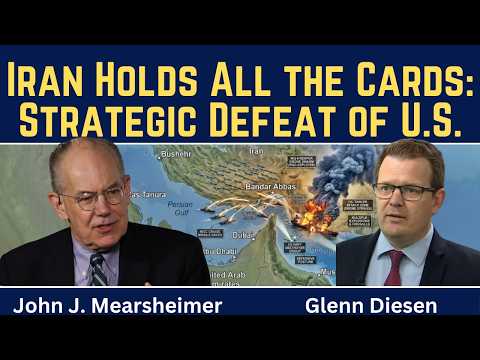
- Economic Impact of War Against Iran 🌍
- Discussion begins with Professor Richard Wolf on economic consequences of the war.
- The war is not expected to be a quick victory for the U.S., contrary to prior beliefs.
- Iranians' Resilience and U.S. Response 📉
- Key factors depend on Iranian people's tolerance to aggression.
- U.S. may push for escalated military action due to perceived need to avoid defeat.
- Debt Crisis and Military Spending 💰
- U.S. currently holds a debt exceeding a trillion dollars annually with a declining credit rating.
- Proposed increase in military budget from $900 billion to $1.5 trillion alongside new war costs poses serious fiscal concerns.
- Interest Rates and Economic Outlook 🔍
- Anticipation of higher interest rates due to military spending and economic instability.
- Concerns over potential stagflation, a mix of recession and inflation, complicating fiscal policies.
- Political Ramifications and Future Consequences ⚖️
- Indicators of President Trump's declining popularity, influenced by recent election outcomes and his own voting behavior.
- Unresolved domestic issues, such as scandals and economic troubles, continue to overshadow the war's narrative.
- Escalating Tensions in Iran 📈
- Current situation in Iran is deteriorating rapidly.
- Political maneuvers like Maduro's abduction are seen as desperate attempts by leadership.
- Solidarity of Iranian people is uncertain, impacting predictions.
- Global Economic Impact 🌍
- Energy prices are rising globally, causing widespread economic strain.
- Countries are limiting fuel supplies and adjusting policies due to oil price spikes.
- Shift towards alternative energy sources could lead to permanent changes in energy consumption.
- Support from Russia and China 🤝
- Iran's reliance on Russia and China for military supplies poses a significant threat.
- With mutual concerns, both Russia and China may strengthen their support for Iran.
- Dangerous Military Strategies ⚔️
- Discussions around possible nuclear strategies signal desperation in U.S. policy.
- There’s concern over the U.S. military’s stability amidst political challenges.
- U.S. Societal Turmoil ⚠️
- Public perception of the U.S. is shifting to one of instability and turmoil.
- Military loyalty is questioned, indicating deeper societal fractures.
- Current Instability and Anxiety 😟
- The speaker notes a heightened anxiety in New York City, reflecting a widespread disillusionment with institutions.
- Observations indicate a feeling that something is deeply wrong in society, leading to calls for dramatic change.
- Changing Political Landscape 🗳️
- Significant political shifts are highlighted, with New York electing a Muslim socialist mayor, marking a departure from traditional politicians.
- The speaker suggests that people's desire for change has transcended typical party lines and ideologies.
- Rising Tensions in Europe 🌍
- A sense of desperation and pessimism pervades European politics, with an emphasis on war rather than diplomacy.
- The rhetoric has shifted to a moralistic tone that dismisses opportunities for peace negotiations.
- Progressive Movements and Youth ✊
- An emerging progressive movement within the Democratic Party is noted, driven by younger generations upset over poor job prospects and socioeconomic conditions.
- The popularity of figures like Bernie Sanders and potential presidential candidates like Alexandria Ocasio-Cortez shows a shift towards more progressive policies.
- Challenges of Global Stability 🌐
- The speaker emphasizes the unstable business climate in the U.S., stating that previous stability has diminished.
- Current geopolitical strategies appear to be failing, indicating a broader struggle for power and control on the world stage.
- Economic Concerns and Political Disillusionment 💼
- Discussion on the declining appeal of certain political personas.
- Rising costs for cars and homes impacting public sentiment.
- Interest rates are expected to rise, and the job situation appears grim.
- Lessons from the Iran War 📚
- Acknowledgment that controlling unknown variables in global conflicts is challenging.
- Implies that similar unpredictability exists in the world economy now.
- Geopolitical Dynamics 🌍
- Commentary on Iran's alliances and potential support during global tensions.
- Suggests that allies will likely rally behind Iran if they perceive threats.
- Retaliation Narratives 🔄
- Highlights the irony of Western actions and possible reciprocation by Iran.
- Reflects on the cyclical nature of international conflicts.
- Conclusion and Gratitude 🙏
- Brief farewell, expressing appreciation for the interviewee's insight and time despite commitments.
📬 Never miss a Glenn Diesen video — every new upload summarised in your inbox.
Follow free