- Introduction and Context 🎤
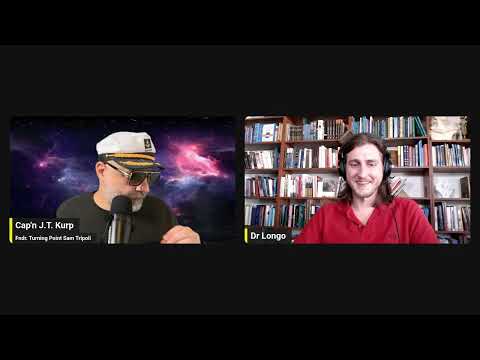
- Host welcomes guests and mentions previous attempts to record this episode.
- Courtney Turner is introduced, who discusses her book "The Final Betrayal" and the topic of Tavistock.
- Understanding Tavistock 🔍
- Host summarizes Tavistock's origins tied to studying PTSD post-World War I.
- Courtney confirms host's overview and mentions that Tavistock's work leveraged trauma for control.
- The Focus of Courtneys Book 📚
- Clarification that "The Final Betrayal" is not solely about Tavistock but rather about the regulatory infrastructure shaping modern America.
- The book discusses the emergence of technocracy and implications under the Trump administration.
- AI's Role in Regulation 🤖
- Discussion on how AI acts as a choke point in emerging technological paradigms.
- The conversation highlights the digital financial system being shaped by regulatory measures that may favor tokenization.
- Tokenization and Society 💰
- The nature of gamified and tokenized societies is explored.
- Mention of apps rewarding physical activity, emphasizing societal conditioning towards such structures.
- Discussion on Shills and Influencers 🤔
- The conversation revolves around individuals potentially being shills or lacking critical thinking, particularly within the "Rogan sphere."
- Criticism is directed towards how certain factions focus on discrediting figures like Joe Rogan instead of addressing broader political issues surrounding Trump.
- Platforming and Its Implications 📢
- Joe Rogan's association with the intellectual dark web raises questions about the concept of platforming.
- The speakers emphasize their disdain for the term, arguing that it oversimplifies the complexity of hosting various individuals on platforms.
- Incentives and Consequences ⚠️
- Discussion highlights the reward systems in place for certain content, indicating that not all online interactions are conscious.
- Emphasis is placed on how these dynamics influence what gets shared and viewed more frequently.
- Genocide and Media Depictions 📰
- A critical stance is taken on genocide rhetoric, particularly focusing on current conflicts, including those in Gaza.
- The narrative discusses how atrocities are sometimes minimized in mainstream media, with poignant examples of how information is disseminated or manipulated.
- Cultural Infiltration in Politics 🌍
- Analysis of human terrain systems and their use in cultural infiltration and military operations highlights the intersection of intelligence and social forces.
- The operation "defeat disinfo" is mentioned as an application of these strategies within the political landscape.
- Ethics in Anthropological Research 🤔
- Discussion on the Teams of Team book, which was shut down in 2013 by the American Anthropology Association.
- It was deemed unethical, emphasizing issues surrounding human rights in research practices.
- Cultural Infiltration 🕵️♂️
- Analysis of subversive tactics used in cultural infiltration and manipulation.
- Noted that human terrain systems were used for cultural linguistics, with marketing decisions that hide their past practices.
- Information Suppression 🔒
- Discussion on the Wayback Machine and how certain tech companies use blocks to prevent archival access.
- Significance of retaining archived information that the company does not want the public to know about.
- Transhumanism and Original Sin 🧬
- Connection made between transhumanism, the desire to become 'like God,' and the concept of original sin.
- Discussion about the philosophical implications of these ideas as they relate to technocracy.
- Catalytic Funding and Epstein's Role 💸
- Insight into how Epstein operated as a node for catalytic funding with possible connections in Wall Street.
- Highlighted how moral flexibility could have allowed him to rise in prominence and influence.
- Critique of Academia and Research Practices 🎓
- Discussion on Jesse Michaels' talk critiquing academic arguments.
- Host expresses disrespect for the education system, emphasizing its detrimental effects on intellect and discourse.
- Commentary on Social Structures 📜
- Analysis of motivation in educational incentives and the presence of radical ideas driving academia's perversion.
- Comparison to factions in academic settings, likening them to “Hogwarts,” indicating a segregation in knowledge and authority.
- Conspiracy Connections 🔗
- Reference to deceptive operations in societal movements such as Gamergate.
- Insight into political figures like Steve Bannon and the manipulation of narratives for nefarious purposes.
- Unpacking the Unity Project 🔍
- Examination of the Unity Project and its evolution from prior political movements.
- Mention of civic reform efforts and connections to notable figures and the larger Game B movement.
- Exploration of Mind Control and AI 🤖
- Discussion on epistemological stages related to consciousness and potential applications to AI.
- Speculation on trainable consciousness aiming to leverage advanced consciousness for future societal structures.
- AI and Consciousness 🧠
- Discusses the concept of Artificial General Intelligence (AGI) and the differing views between theorists like Ray Kurzweil and Marvin Minsky versus others like Gino Yu and Goertzel.
- Key contention that achieving AGI necessitates consciousness, not just computational power, referencing Jim Rutt and the California Center for Machine Consciousness.
- AI Designer Babies 👶
- Exploration of the notion of "AI designer babies" and concepts of potential cloning and genetic engineering to create a new generation.
- Highlights Elon Musk's involvement in eugenics and the use of CRISPR technology for genetic selection.
- Pop Culture References 🎬
- Draws comparisons to movies like Twins and Gattaca that explore themes of genetic manipulation and designer human beings.
- Discussion encompasses how these cultural narratives reflect concerns about future genetic practices.
- The Tavistock Institute 📚
- Introduction to Dr. John Coleman and discussions around the Tavistock Institute of Human Relations as a pivotal subject.
- The speaker mentions the high value of some of Coleman's books, indicating the controversial nature and the pursuit of hidden knowledge.
- Intelligence Gathering Models 🕵️
- Discussion of a Trust Foundation model and its connection to dialogue for intelligence gathering.
- Comparison is made to the Bilderberg Group and similar organizations, raising questions about transparency and governance among elites.
- Discussion on Word Puzzles and Remote Viewing 🎉
- Participants reminisce about their experiences with word puzzles.
- Mention of summer memories and recruitment by Monarch programmers.
- Sean David Morton 📚
- A shared memory of a close friend, Sean David Morton, who had a significant impact.
- Discussions of his books and claiming Einstein solved a unified field theory.
- Remote Viewing Concepts 🕵️♂️
- Conversation shifts to remote viewing, with references to Project Stargate.
- Emphasis on synchronicity and unique traits of individuals related to these abilities.
- Cultural Themes and Occult Practices 🌍
- Discussion about Roseanne Barr and her claims regarding cult experiences.
- Insight into the intersection of various religions and potential cult influences.
- Historical Context of Tavistock 🏛️
- Overview of Tavistock's origins, tracing back to British War Propaganda Bureau during WWI.
- Insight into psychology and propaganda relations, particularly regarding Edward Bernays and his influence.
- CIA and Military Testing 🕵️♂️
- Discussion on the CIA.gov documents revealing military testing.
- Mention of KGB and other influences like China.
- Sensory Training and Brainwashing 💡
- Comparison of military sensitivity training to Chinese brainwashing practices.
- Reference to L. Ron Hubbard and his controversial techniques.
- Influence of Propaganda 📺
- Introduction of Edward Bernays and his nephew, Mark Randolph Bernays, as key players in modern propaganda.
- Notable mention of Netflix as a significant tool for influence.
- Illuminati and Education 🎓
- The conversation touches on the Bavarian Illuminati and their warnings.
- Discusses the influence of figures like George Washington and Thomas Jefferson on education.
- Role of Tavistock Institute 🔍
- Mention of the Tavistock Clinic and its role in shaping psychological practices.
- Discussion on Operation Phoenix and its historical significance related to military operations.
- Founders of Conscious Evolution 🌱
- Discussion about Conscious Evolution and its founders at the Esalen Institute.
- Influenced by Abraham Maslow, emphasizing concepts such as psychic networking referred to humorously as “supra sex.”
- David Temple's Manifesto 📜
- Introduction of the David Temple and their manifesto, “First Principles First Values.”
- Emphasis on cosmoerotic humanism and its implications on anthropology.
- Convergence of Groups 🔄
- Exploration of the merger between two groups linked to Andrew Cohen and Game B.
- Mention of Cohen’s “white paper” on Nirvana and its diplomatic approach toward influence operations.
- Tavistock Institute's Influence 🕵️
- Analysis of the Tavistock Institute's role in shaping psychiatry and intelligence operations.
- Discussion on how they provided tools to enable control and predict human behavior in intelligence.
- Conclusion and Book Promotion 📚
- Wrap-up with a promotional note about the book “The Final Betrayal: How Technocracy Destroyed America.”
- Encouragement to read and explore more about the author’s insights through various platforms.
📬 Never miss a Kurt Metzger video — every new upload summarized in your inbox.
Follow free