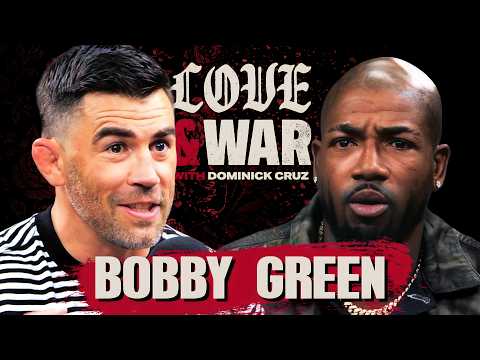
Video Summary — “Love & War” Podcast Episode (Bobby Green & Guest)
Duration: Long-form interview/conversation
Tone: Candid, reflective, combative, humorous 🎙️🥊
Main Themes
- Love vs. War — central metaphor: fighters find war (the gym/cage) easier and more comfortable than love (relationships, family).
- Balancing life — struggle to reconcile violent/competitive persona with vulnerability and love outside the sport. 💔❤️
- Artistry of fighting — MMA as performance/art: footwork, rhythm, style, entertainment value vs. pure competition.
- Psychology & performance — using narration, mind games, rhythm, surrender, and the “flow”/zone to perform at peak.
- Risk vs. reward — style is high-risk/high-reward; choosing spectacle vs. safety affects career outcomes.
- Community & responsibility — fighters’ roles in their communities, families, supporting others; consequences of lifestyle choices.
Key Points & Quotes
- Title “Love & War” comes from fighters experiencing war at home and love at the gym; love is harder for many fighters.
- Fighters often prefer the simplicity/relief of war (fighting) to the emotional labor of love.
- Bobby Green: gym is like “church” — the only time his mind stops running; fighting frees him from outside chaos.
- Many fighters carry external drama (relationships, legal/financial issues) into camp, complicating performance.
- Artistry: movement, footwork, unpredictability (Bobby’s style compared to earlier innovators). Fighters discussed lineage — how styles influence generations (Dom → TJ, etc.). 🎨🥋
- Narration & psychology: Bobby talks during fights, tells truths to build credibility, then slips in deceptive lines to manipulate opponents.
- Technique breakdowns: feints with feet, creating “fake range,” drawing bluffs, calling opponent to act, countering—uses position, rhythm, and timing rather than brute force.
- Training philosophies: live drilling vs. static drilling; conditioning and pacing (sprint vs. marathon) determine fight approach.
- Flow state (“ultra instinct”): described as surrendering to training and instincts; often arrives in longer (5-round) fights or after many fights/experience. Goal is to find/control it.
- Risk management: hands-down, pocket fighting is entertaining but invites counter risk; recent fights show Bobby adding more power intentionally.
- Boxing vs. MMA culture differences: boxers more guarded/ceremonial in gyms; MMA fighters more willing to spar anyone, “go to death willingly.”
- Personal anecdotes: injuries, surgeries, weight cutting, multiple baby mamas, community obligations, financial losses (jewelry theft), run-ins in gyms/streets — illustrating real-life complexity behind fighters.
- Sponsorship plugs embedded (Rula mental health, BlueChew) — mental health and performance support mentioned as resources. 🧠💊
Practical / Instructional Takeaways (for fighters, coaches, performers)
- Prioritize rhythm and footwork to neutralize size/strength differences — constant movement makes you hard to hit. 👣
- Use live, controlled sparring drills to develop timing, distance, and improvisation under pressure.
- Practice psychological elements: honest reads build trust, then small deceptive moves can shape an opponent’s actions. (Narrate truths → small falsehoods = influence) 🧠
- Manage energy: plan pacing—don’t sprint every round. Treat multi-round fights as a marathon; choose when to expend maximal power. ⏱️
- To find flow state: repeatedly cue a pre-performance ritual (music, visualization), trust training, surrender control to instincts, and aim to “receive” rather than force outcomes. 🎧
- Balance risk/reward: decide when to chase a knockout vs. when to accumulate “touches” (speed + volume) to wear an opponent down.
- Recover & adapt: train around injuries; adjust sparring intensity (protecting injured areas) while maintaining timing and rhythm work. 🛠️
- Mental health: consider affordable therapy options (Rula mentioned) to process off-camp drama and improve life/fight balance. 🗣️
Notable Guests & Mentions
- Bobby Green (primary speaker) — style, philosophy, anecdotes.
- Dom (host) — analyst; compliments Bobby’s artistry and footwork.
- Mentions: Jeremy (friend/opponent), TJ, Conor McGregor (callout idea), Nate, Dustin, Hooker, Beneil Dariush, Renato Moicano, Drew, Rampage, Adrien Broner, Floyd Mayweather’s gym anecdote. 🧾
Memorable Moments / Highlights
- Bobby’s gym-as-“church” remark — gym provides mental clarity. ✨
- Breakdown of his in-fight psychology: telling truth to seed trust, then using that trust to mislead. 🎭
- Discussion of the “zone”/flow state and the desire to control/trigger it consistently. 🔥
- Anecdote of being blocked from sparring at Mayweather’s gym; then proving himself in a later small sparring match. 👊
- Candid talk about domestic and community responsibilities (multiple children, supporting others) — humanizes fighter life beyond the cage. 👨👧👦
Outcomes / Closing Notes
- Both host and guest agree fighters must learn to integrate love and war rather than be dominated by a single mode; many are actively trying to transform.
- Bobby: open to fights (calls out Hooker, Renato, Beneil; joked about Conor), seeks next exciting matchup and continued pursuit of flow.
- Episode balances technical fight analysis, raw personal life stories, and philosophical reflection on identity, performance, and growth.
Emojis TL;DR
- Artistry & movement: 🎨👣
- Mind games & flow: 🧠⚡
- War/home tension: 🥊🏠
- Family/community obligations: 👨👧👦🤝
- Mental health/sponsors: 🗣️💊
If you want: I can extract timestamps for each major topic, produce a short bullet-point “action plan” for fighters to practice the techniques discussed, or create shareable quotes/highlight clips.
📬 Never miss a Love & War with Dominick Cruz video — every new upload summarized in your inbox.
Follow free