- Introduction to the Show and Topics 🎤
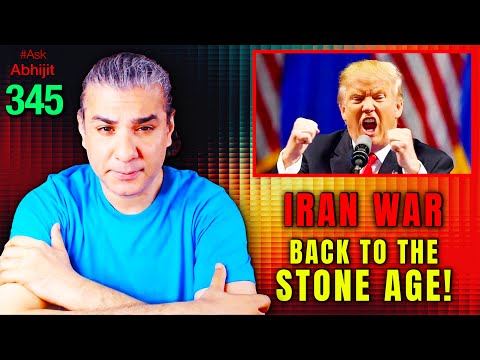
- Host welcomes viewers to episode 345 of the Ask Kabijit show.
- Main topics include the ongoing US-Israeli war against Iran and viewer questions.
- Trump's Recent Address 📢
- Discussion of President Trump's recent speech concerning the war.
- Key points: continued military engagement, ongoing bombing plans against Iran, and disappointment in lack of progress.
- International Reaction and NATO Dynamics 🌍
- Addressing NATO countries refusing US military base usage during the conflict.
- Highlights tensions between the US and nations like Italy, France, and Spain over military cooperation.
- Concerns About NATO's Future ⚖️
- Speculation about NATO's relevance and how US actions could lead to future tensions within the alliance.
- Example of UK concerns regarding dependence on US military leadership.
- Addressing Nuclear Security ☢️
- Examination of the UK's nuclear deterrent system and its reliance on American technology.
- Discussion about the implications of US foreign policy on UK national security interests.
- UK Nuclear Deterrent Reality 🌍
- The UK's nuclear deterrent is controlled by the US.
- Confirmation from a British political leader suggests it’s merely a nominal deterrent.
- NATO Stance and Legislation 🇺🇸
- US Congress passed a bill to prevent any president from unilaterally withdrawing from NATO.
- Marco Rubio, who previously supported this bill, now questions NATO’s value.
- Italian Prime Minister's Bold Statement 🇮🇹
- Madame Meloney condemns Israel's actions, calling for European sanctions against Israel.
- A shift in European sentiment appears against Israel amidst ongoing conflicts.
- UK Withholding Intelligence from US 🔒
- UK officials are withholding intelligence from the US due to concerns over Trump's erratic behavior.
- Trust issues arise from the United States' handling of sensitive matters and allies' concerns.
- India's Fighter Jet Acquisition Dilemma ✈️
- France denies source code access for Rafal jets, limiting India's independent military modifications.
- India may consider Russian Sukoy 57 jets offering full control as a better option amidst the ongoing defense challenges.
- US Oil Transactions and Trump's Dilemma 🛢️
- Discussion on oil transactions occurring in non-dollar currencies, posing risks to the US economy.
- Mention of Trump being in a difficult position, making it hard for him to withdraw from the current war situation.
- Iran's Missile Capabilities 🎯
- Inquiry about the difficulty for Iran to develop longer-range missiles.
- Ballistic missile ranges can increase significantly with lower payloads and more fuel, making it feasible for Iran to reach targets in Western Europe.
- Iran's Rational Response 🕊️
- Emphasis on Iran's rational behavior during the war, arguing they won't initiate attacks on US cities.
- The video asserts that recent conflicts were provoked by the US and Israel, not initiated by Iran.
- Current War Dynamics ⚔️
- Analysis of who is winning or losing; while Iran sustains damage, strategically it may still be ahead.
- The discussion indicates America and Israel may not achieve their war objectives against Iran.
- Potential Global Conflict 🌍
- Speculation on the possibility of a World War II scenario if Europe is dragged into the conflict by Trump.
- Acknowledgment of the precarious situation and potential for international escalation, especially involving Russia and China.
- Impact on the UAE 🇦🇪
- Tough Times for the UAE: The UAE faces challenges amid regional conflicts, with high-net-worth individuals fleeing cities like Dubai.
- Population Dynamics: Approximately 60% of the UAE's population is from the subcontinent; about 40% are of Indian origin.
- Economic Models Diverge 💼
- Abu Dhabi: Focuses on oil revenue, supported by the Abu Dhabi National Oil Corporation (ADNOC).
- Dubai: Functions as a luxury resort city's economy, relying on wealthy residents and tourists.
- Military Concerns and Shifting Support 🛡️
- Military Base Vulnerability: Concerns over American military bases as they may be targeted, possibly diminishing US influence.
- Gulf Nations: They have already given bases to the US, but there is hesitance to continue support amidst regional tensions.
- Iranian Victory Consequences 🚩
- Iran's Strategic Gains: A hypothetical Iranian victory could lead to enduring Iranian power, maintaining its military capabilities.
- Impact on US Dollar: If Gulf nations switch to non-dollar transactions, it could destabilize the petrodollar system, affecting US economic power.
- Advice for Aspiring Software Developers 💻
- Market Understanding: Analyze potential global niches and customer demands to create impactful software.
- Experimentation Suggestion: Instead of lengthy research, it's recommended to release multiple products regularly to understand market responses effectively.
- Russia's Oil Refinery Strikes 📉
- Multiple Strikes: Ukraine has launched several drone strikes on Russian oil refineries, showcasing the effectiveness of their drone technology.
- Russia's Response: Observers express confusion over Russia's lack of a strong protective response, leading to perceptions of weakness.
- Trump's Foreign Policy Mask Falls 🎭
- Shift in Perception: Discussion on former President Trump’s shift from a non-aggressive stance to military actions that contradict his earlier position of not starting wars.
- Implications for Iran: The conversation highlights the destruction and long-term impacts on Iran due to ongoing military actions during Trump's presidency.
- Iran as a Potential Regional Hegemon 🌍
- US Withdrawal: Speculation on how the US would react if forced to withdraw from West Asia, with Iran potentially emerging as the dominant power.
- Military Capabilities: The potential effectiveness of Iran's drone and missile technology is discussed as a factor in regional dominance.
- Sovereignty of Pakistani Nukes 🔍
- Questioning Origin: Claims are made suggesting that the sovereignty of Pakistan's nuclear weapons may be questionable, hinting at a possibility of reliance on US assistance in their development.
- Regional Stability Concerns: The discussion raises concerns about the balance of power in South Asia and the implications for India.
- Production Speed vs. Quality in Defense ⚔️
- Critical Defense Needs: Emphasis on the necessity for rapid production of missile and drone technology to keep up with military demands.
- Strategic Manufacturing Goals: A call for increased production rates to enhance military capabilities effectively.
- Customs and Colonial Impact 📜
- Discussion on the inland customs line created by the Commissioner of Customs to prevent salt smuggling in India.
- Highlights the salt tax imposed by the British and its devastating impact on the Indian population.
- Founding of the Indian National Congress 🤝
- Mention of Alan Hume as a founder of the Indian National Congress in the 19th century.
- Significant growth in membership leading to political changes in pre-1947 India, primarily dominated by British-educated leaders.
- Political Maneuvering in INC 🏛️
- Gandhi engineered a coup within the Congress against Bose, leading to his ousting and establishing Nehru as Prime Minister despite losing the vote.
- Nehru's Leadership and Ideology 📈
- Nehru’s Fabian socialism characterized by slow economic growth criticized for long-term negative effects on India's development post-independence.
- Shroud of Turin Findings 🧬
- Analysis indicating that 40% of the DNA of the Shroud of Turin suggests Indian origin, linking it to historical trade but not evidence of usage for Jesus Christ.
- Iranian Attacks and U.S. Superpower Status 🤔
- Ongoing Israeli attacks on Iranian infrastructure.
- Discussion on the provocation level of Iran and its potential reactions.
- The U.S. has maintained its position as the leading superpower since the collapse of the USSR.
- Historical Context of Power Dynamics 🌍
- Hypothetical scenarios regarding USSR and Germany winning historical conflicts.
- Notion that oppression differs little regardless of the ruling nation, exemplified by various historical rulers like Genghis Khan.
- Sovereign Nations Discussion 🌐
- Identifies six sovereign nations: US, Russia, China, India, Israel, and Iran.
- Claims that Iran, currently not a vassal of China or Russia, is fighting multiple powerful nations on its own.
- Federal Reserve Ownership Transparency 🏦
- Discussion around the ownership structure of the Federal Reserve Bank.
- Indicates that it operates privately and raises questions about transparency in its ownership.
- Civic Sense Development in India 📈
- Advocates for strict enforcement of laws such as fines for public misbehavior to promote civic sense.
- Suggests that real change comes from guaranteed punishments rather than just lectures.
- Multipolar Dynamics in Global South 🌍
- Discussion on the rise of independent nations in the Global South, particularly India, Iran, and China.
- Speculation on the potential tripolarity if the US withdraws from West Asia.
- Middle Eastern Alliances and Tensions 🌐
- Analysis of Qatar and Saudi Arabia's experiences with US authorities, highlighting betrayal and lack of protection.
- Critique of the US's military strategy in the Gulf, suggesting it was more about control than protection.
- US Influence on India's Approach to Pakistan 🇮🇳
- Exploration of Trump's influence over India's decision to ceasefire with Pakistan amid threats of sanctions.
- Emphasis on US assets in Pakistan, including nuclear weapons and F-16 fighter jets.
- Strategic Oil Dynamics ⛽
- Commentary on Russia's oil exports to Pakistan emphasizing it's a business decision rather than political allegiance.
- Explanation on Iran's refusal of Pakistan's mediation due to distrust towards Pakistan's relations with the US.
- Cultural Identity and Historical Context 📜
- Comparison of Iran and Pakistan's pride in their respective histories, particularly regarding pre-Islamic heritage.
- Discussion on how cultural identity shapes perceptions and political narratives in both nations.
- Iran's Preparedness 📈
- Iran demonstrates preparedness: They have conducted thorough analysis and preparation regarding their strategies against opponents, showcasing professionalism and hard work.
- China's Interests in Iran 🇨🇳
- China's stakes: Iran's stability is crucial for China, as they rely on Iranian oil supplies. China provides technological support to ensure Iran remains resilient against US and Israeli pressures.
- Civilization vs Empire 🏛️
- Distinction: The speaker discusses the difference between civilizations and empires, emphasizing that one can dominate culture without being a civilization, as exemplified by Rome.
- Public Data Importance 📊
- Census transparency needed: In a democracy like India, it's vital to transparently share census data to raise awareness of demographic changes and address politically sensitive issues.
- US Support for Israel 🇮🇱
- Consistent backing: The US's unwavering support for Israel is attributed to the strong influence of the Jewish diaspora within America’s political system, impacting both major political parties equally.
- US Congress and NATO Withdrawal Bill 🇺🇸
- Bill Approved: US Congress approved a bill requiring presidential approval for NATO withdrawal.
- Senate Involvement: Future presidents must seek Congressional approval, making unilateral withdrawal challenging.
- Discussion on Expansionism 🌍
- Russia's Stance: Russia, despite military strength, is not pursuing territorial expansion; aims for peaceful coexistence.
- China and US: Contrarily, both China and the US exhibit expansionist tendencies. India should avoid becoming expansionist.
- Geopolitical Perspectives ⚖️
- World Leaders' Wisdom: Leaders prioritize self-interest and statistics over humanitarian concerns, which can distort their decision-making.
- Long-term Development: Suggestion to focus on economic growth and stability rather than military confrontations for the next two decades.
- Time Management Tips ⏳
- Task Limitation: Limit daily tasks to 2-3 major ones to avoid burnout and enhance productivity.
- Prioritize Effectively: Identify peak energy times and follow the 80/20 rule to maximize results with minimal effort.
- Vision for India's Space Sector 🚀
- Long-term Planning: Advocate for a robust 50-year strategy for India's space ambitions, focusing on incremental goals.
- Private Sector Involvement: Emphasize the need for private sector contributions in building space technology and infrastructure.
- Discussion on the Petro Dollar 🌍
- Key Insight: Trump's policies on hormones have significant implications for the petro dollar.
- If the U.S. fails to achieve its war objectives, Iran may gain regional dominance and shift oil transactions away from the U.S. dollar.
- Avoidance of Sensitive Topics 🚫
- The host firmly states he will not address Hindu-Muslim questions on the channel, emphasizing this as a policy.
- Welcome New Members 🙌
- Appreciation expressed to Push SA, a new member of the channel, reinforcing community engagement.
- End of Live Stream 🔚
- The host concludes the live stream, thanking viewers and announcing the next session scheduled for Saturday night (India time).
- Closing Remarks 🌟
- Encouragement to keep learning, ask questions, and raise standards before signing off with wishes for a good day and night.
📬 Never miss a Abhijit Chavda video — every new upload summarised in your inbox.
Follow free